


Project AI4Sight.
Powered by the Docilis Visual Intelligence Engine (DVIE v1.5). High-performance, edge-computed spatial awareness for visually impaired students.
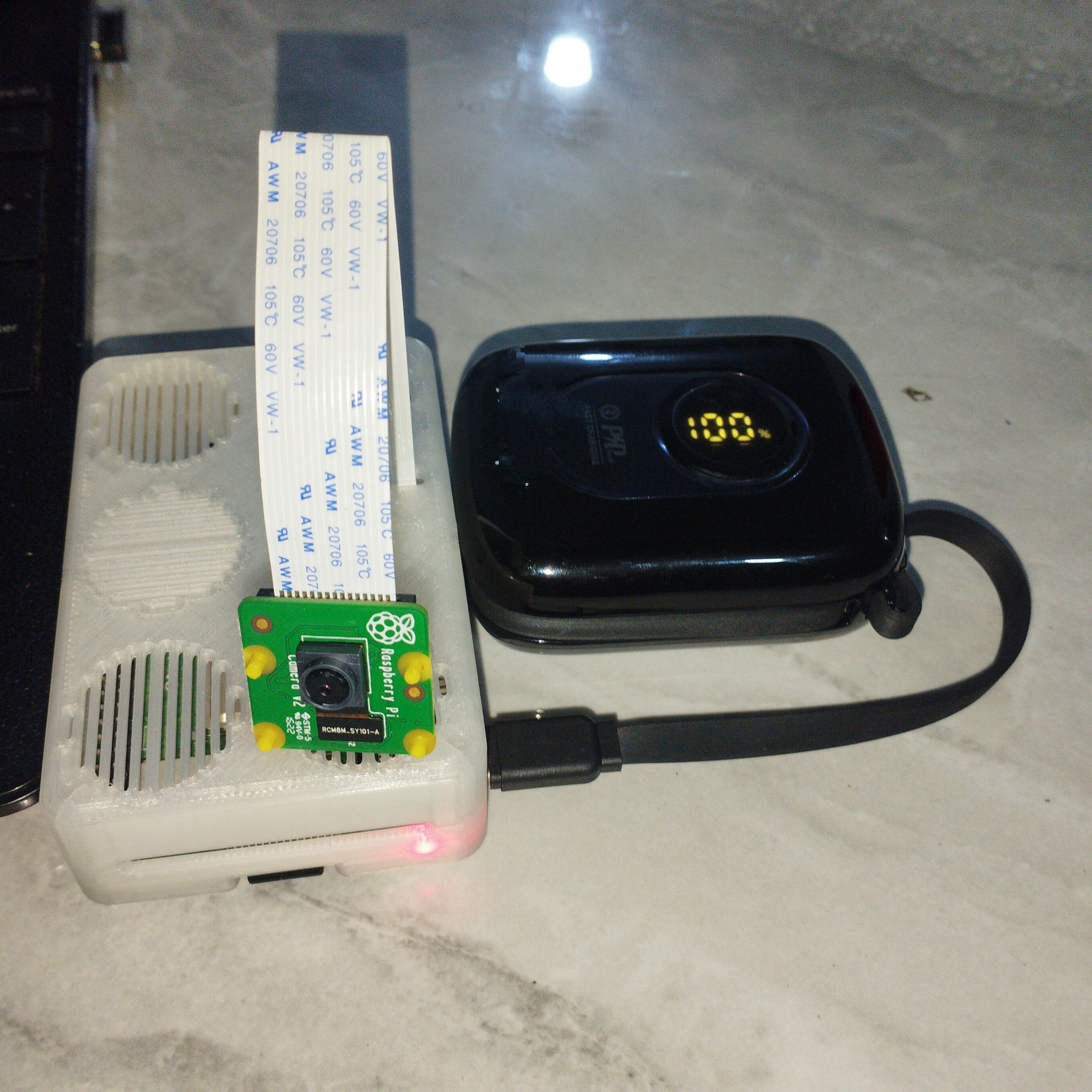
Bare-Metal Edge Perception
Operating strictly without cloud connectivity. All inference, multi-target spatial association, and directional audio synthesis runs directly on a localized quad-core system.
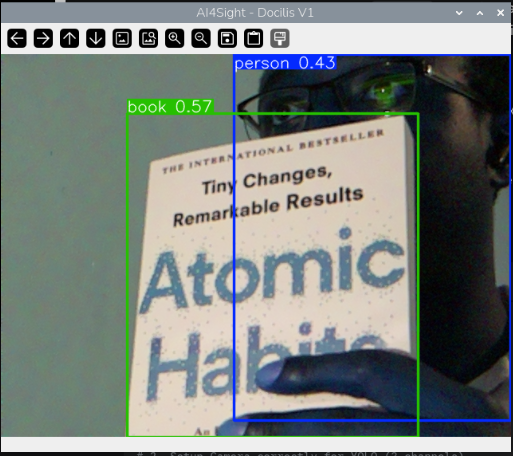
Real-World Vision & Object Recognition.
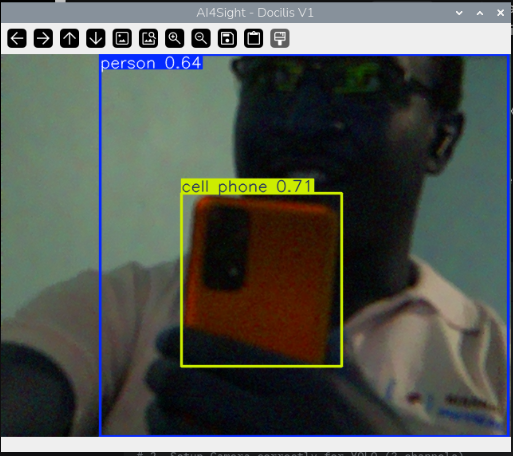
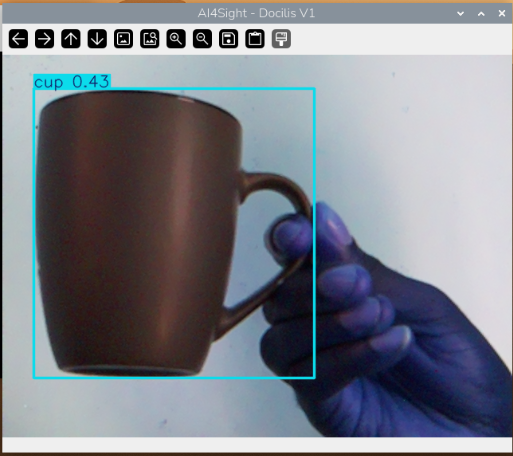
Real-time inference logs demonstrating zero-latency spatial bounding boxes and dynamic obstacle detection in classroom and urban navigation environments.
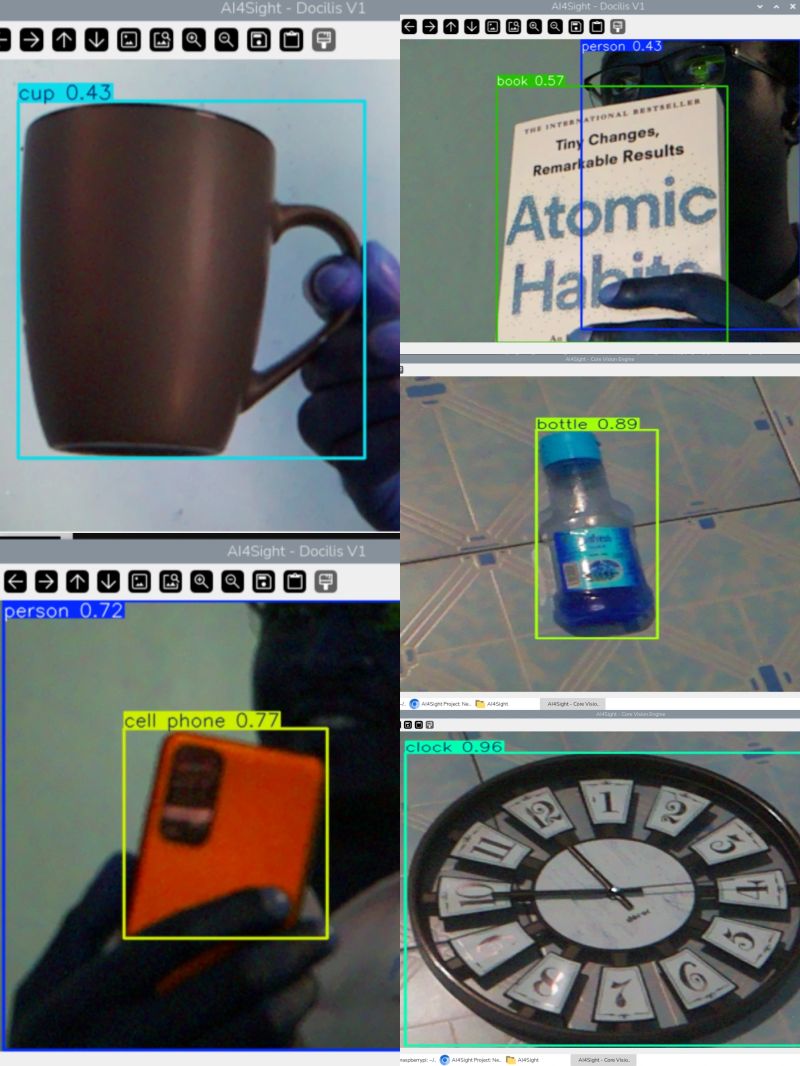
Multi-Target Spatial Resolution
The DVIE neural backbone extracts continuous feature vectors across simultaneous dynamic actors (pedestrians, vehicles, obstacles) and maps them to an 82° FOV 5-zone coordinate grid.
The DVIE Cognitive Pipeline.
Spatial Partitioning & Feature Extraction
The optical stream is segmented into an 82° FOV 5-zone coordinate matrix (Far-Left to Far-Right). The backbone processes incoming V4L2 raw frames in zero-copy shared memory, identifying dynamic obstacles in sub-45ms cycles.
ZONE_AHEAD = centroid_x in [0.40..0.60] // DANGER_VECTOR = ACTIVETemporal EMA Filter
Applies Exponential Moving Average smoothing (α=0.35) to detected trajectory vectors, completely eliminating the 'Ping-Pong' oscillation bug.
Power Guarding
Bitwise register polling of vcgencmd throttled flags prevents battery brownout kernel panics during high-current audio spikes.
Sub-Millisecond ALSA Audio Preemption
Directional HRTF audio beacons are dispatched via direct ALSA memory buffers. If a high-urgency obstacle enters the immediate stride zone, lower-priority ambient feedback is preempted in under 12 milliseconds.
"We test in the real world. We fail fast, learn faster, and document everything."
← Return to Lab Home